Reading path / Flight principles
The Forces Behind Controlled Flight
A wing surface offers the first clue. Understanding its work requires attention to airflow, force direction and the aircraft’s changing attitude.
Begin with force balanceFour forces, one changing balance
Lift acts perpendicular to the relative airflow; drag acts parallel to it and opposes motion through the air. Weight acts towards Earth’s centre. Thrust is the propulsive force produced by an engine and propeller or jet system.
The diagram represents a simplified side view in steady, straight, level flight, with thrust aligned horizontally. When the net force is zero, velocity is constant. In manoeuvring flight, the forces need not oppose one another in this simple arrangement.
Read the wing’s orientation
Angle of attack is the angle between a wing’s reference chord line and the oncoming relative airflow. The chord line is an imaginary straight line joining the leading and trailing edges of an aerofoil section.
For a given configuration, increasing angle of attack generally increases lift coefficient until the critical angle is reached. Beyond this region, substantial airflow separation causes a stall. A stall is an aerodynamic condition, not an engine stoppage, and is not defined by one universal airspeed.
Flaps change wing shape and, on some designs, area. Their effects on lift, drag and operating limits depend on the aircraft.
Control means managing motion
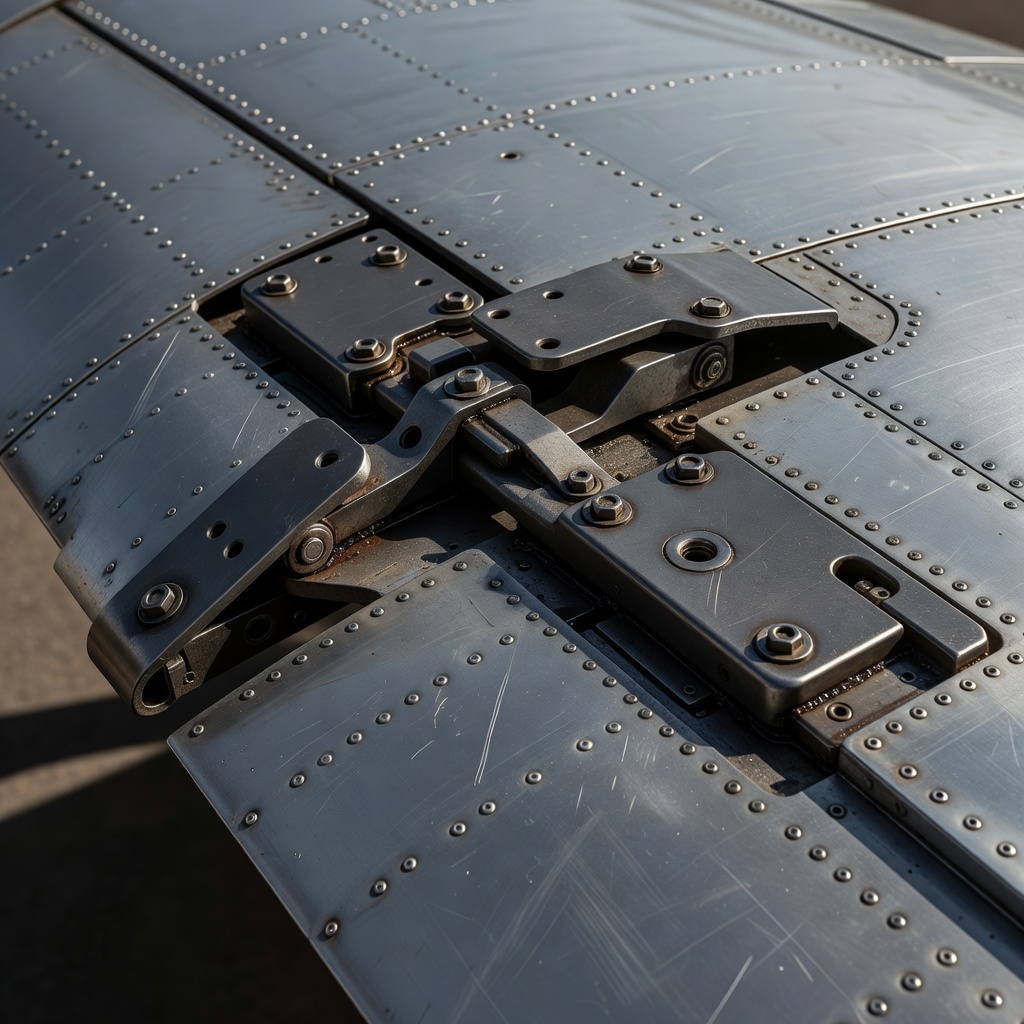
On a conventional aeroplane, ailerons primarily control roll, the elevator primarily controls pitch, and the rudder primarily controls yaw. Roll is rotation about the longitudinal axis; pitch raises or lowers the nose; yaw turns the nose left or right about the vertical axis.
These effects interact. In a coordinated level turn, banking tilts the lift vector so that part of it acts towards the turn’s centre. Maintaining altitude generally requires more total lift than in straight, level flight. Some aircraft use different surfaces or electronic control laws to achieve these functions.
Terminology notes
Distinguish the key terms
- Relative airflow
- The airflow relative to the moving aircraft, rather than wind direction measured at the ground.
- Attitude
- The aircraft’s orientation relative to a reference, usually the horizon. Pitch attitude is not the same as angle of attack.
- Lift coefficient
- A dimensionless measure relating lift to air density, speed and a reference wing area.
- Stability
- An aircraft’s tendency to respond to a disturbance. Stability and the pilot’s ability to control the aircraft are related but distinct properties.